Field Campaigns
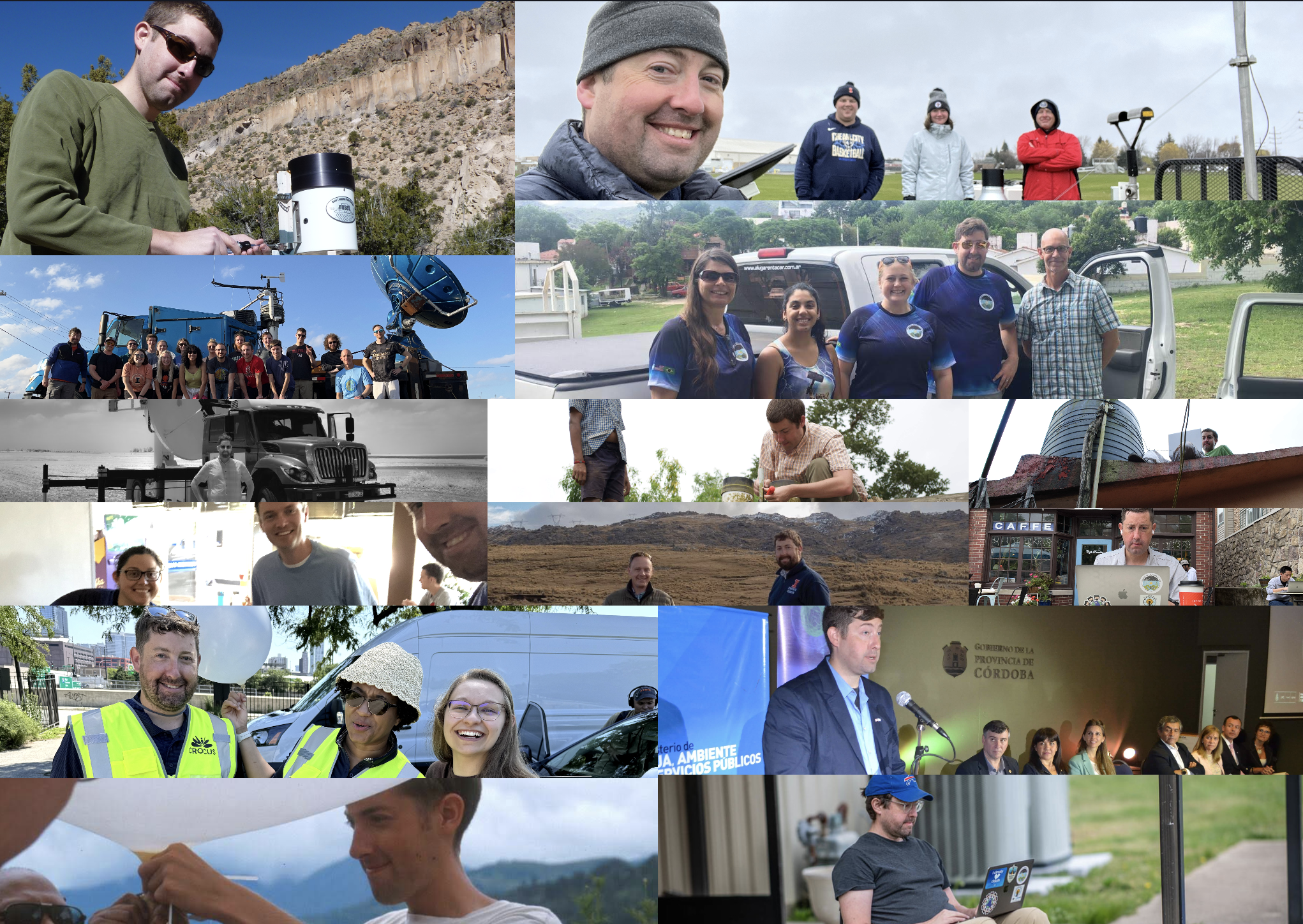
Field-campaign moments from 1998 onward.
Steve Nesbitt has participated in 26 major field campaigns spanning 1998–2025, spanning roles from radiosonde scientist and aircraft scientist to principal investigator of large multi-agency international deployments.
Recent Campaigns (2018–2025)
RELAMPAGO-CACTI (2018–2019)
Remote sensing of Electrification, Lightning, And Mesoscale/microscale Processes with Adaptive Ground Observations — Cloud, Aerosol, and Complex Terrain Interactions
Córdoba, Argentina
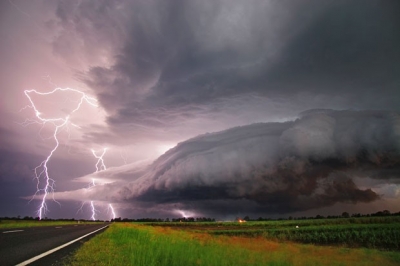
Credit: U.S. Department of Energy Atmospheric Radiation Measurement (ARM) program
Lead Principal Investigator of a $25M+ joint NSF/DOE/NASA/NOAA initiative deploying over 100 scientists across 7 agencies in Argentina. RELAMPAGO-CACTI studied extreme convective storms, orographic convection, and cloud microphysics in the lee of the Andes — one of the world's most prolific regions for deep convection.
CROCUS Urban Canyons (2024)
Community Research on Climate and Urban Science
Chicago, IL
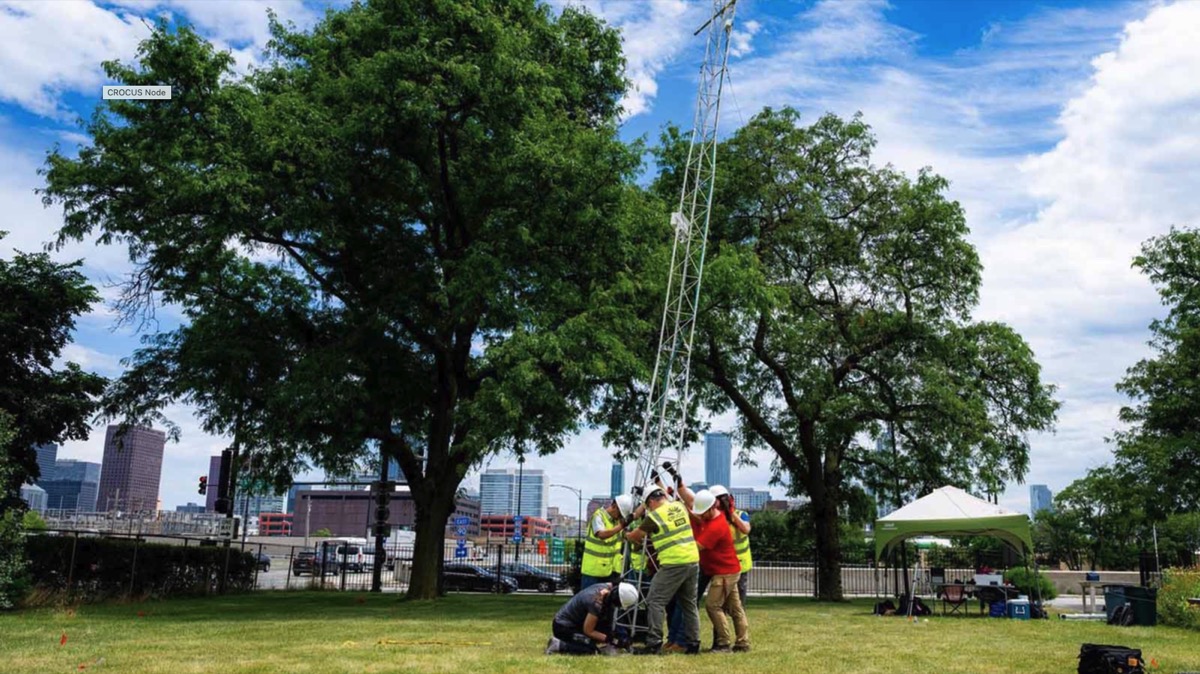
Credit: Argonne National Laboratory
Co-Principal Investigator. Two-week intensive operating period (July 15–29, 2024) measuring how Chicago's built environment — the urban "canyons" formed by streets between tall buildings — modifies local temperature, wind, atmospheric composition, and storm dynamics. Sites were established with community partners on the South Side, including the Gary Comer Youth Center and Blacks in Green, and supported public engagement events bringing CROCUS instrumentation and scientists into the neighborhood.
CROCUS Urban Flooding (2025)
Community Research on Climate and Urban Science
Chicago, IL
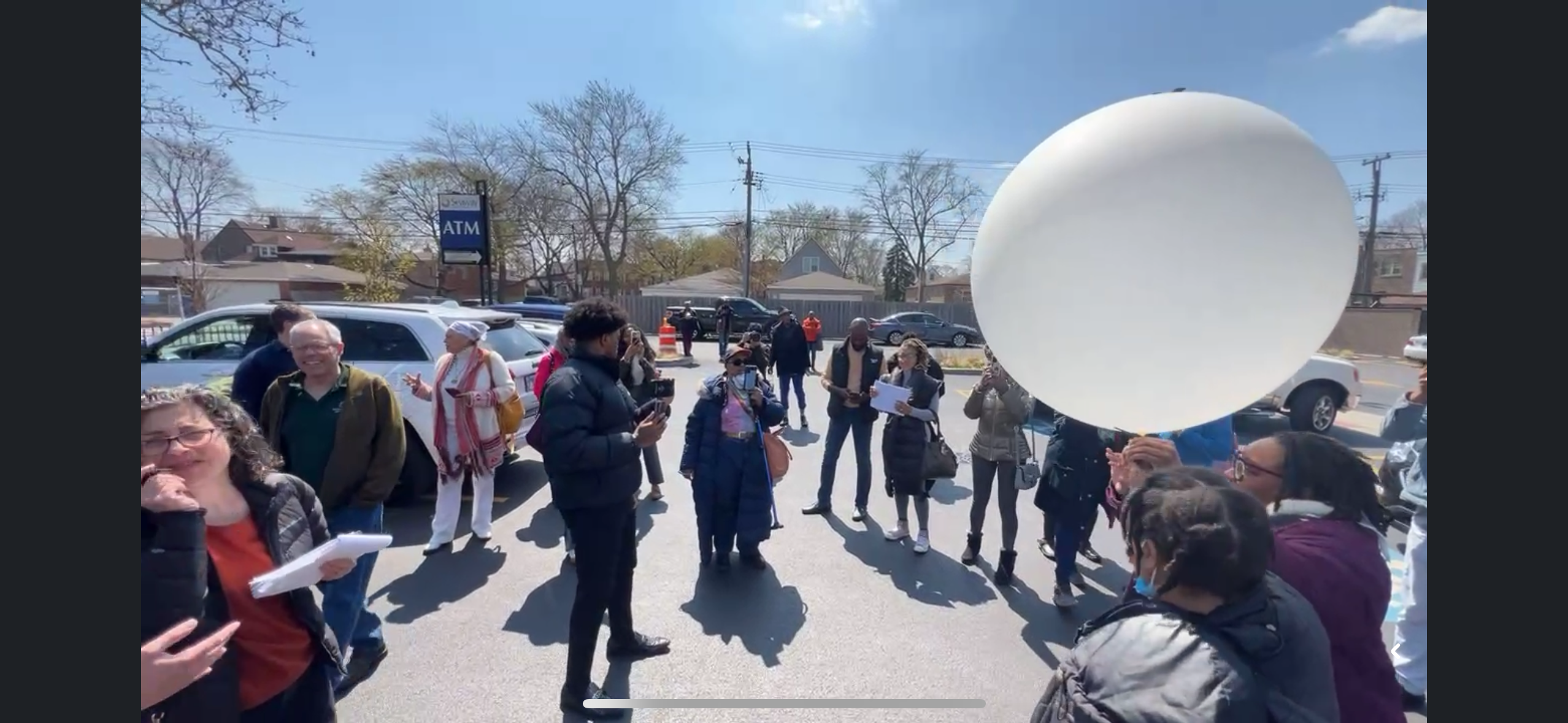
CROCUS community outreach event at Greater Chatham Initiative.
Co-Principal Investigator. Spring 2025 rain-season campaign focused on Chatham, Greater Grand Crossing, and other South Side neighborhoods that experience the highest rates of basement flooding in Chicagoland. Established new CoCoRaHS precipitation-monitoring sites, supported community flood-awareness events, and contributed to the launch of the Water On My Block reporting tool. Co-designed with the Greater Chatham Initiative and The Puerto Rican Agenda of Chicago.
Lake Effect Snow Microphysics (2022–2024)
Buffalo, NY
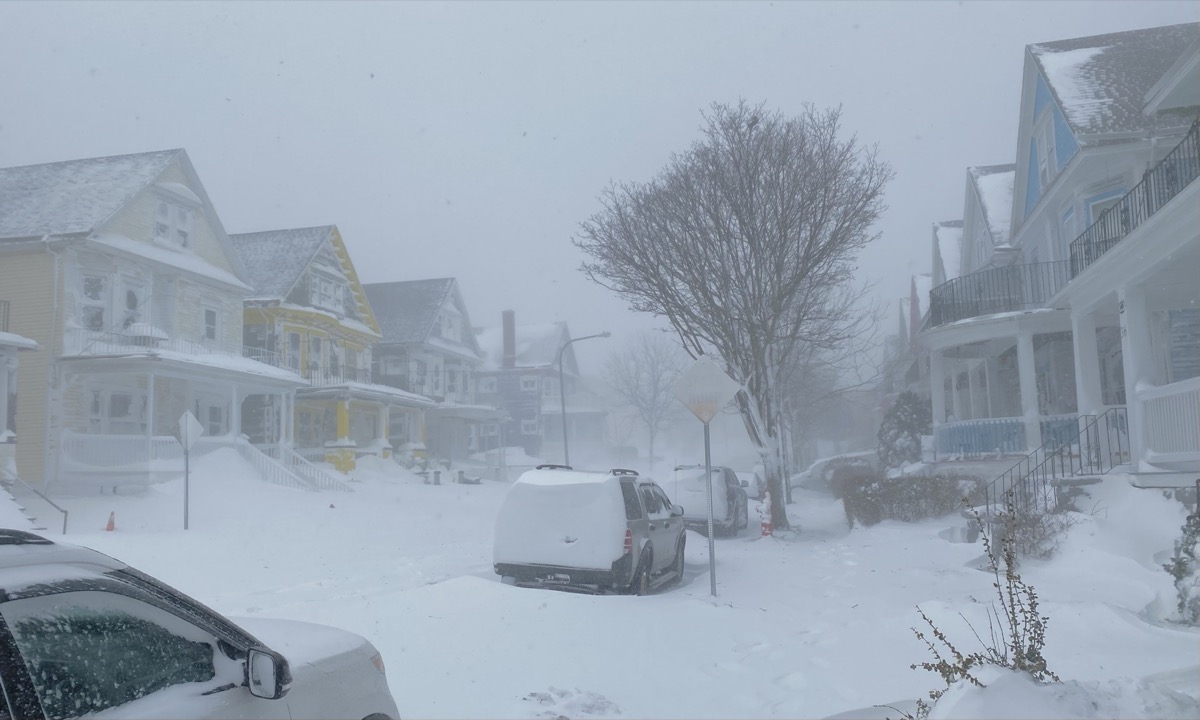
Credit: Wikimedia Commons, CC BY-SA 4.0

Study of microphysical processes in lake-effect snowstorms using polarimetric radar and in situ aircraft observations.
PERiLS (2022–2023)
Propagation, Evolution, and Rotation in Linear Storms
Southeastern United States
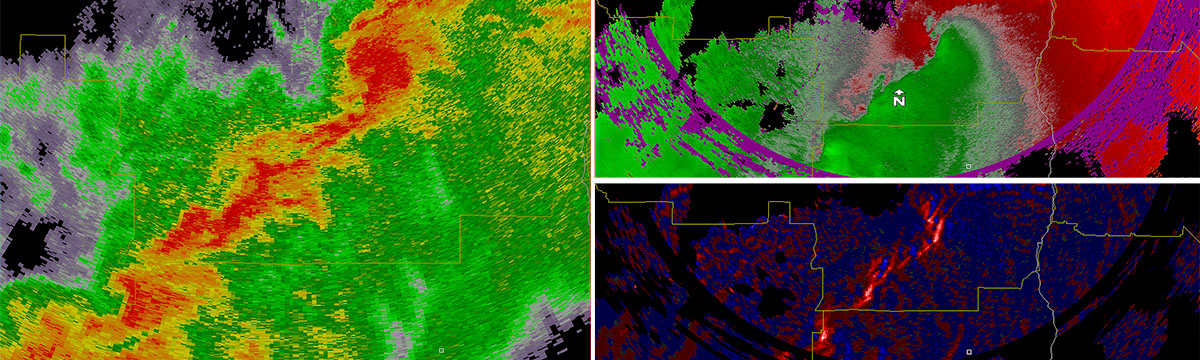
Credit: NOAA National Severe Storms Laboratory
Collaborative NSF/NOAA field campaign examining the mechanisms of tornado production and severe weather in quasi-linear convective systems. Deployed radars, mesonets, and uncrewed aerial systems across seven states; documented 16 tornadoes within multi-Doppler coverage.
CAMP²Ex (2019)
Cloud, Aerosol and Monsoon Processes Philippines Experiment
Philippines
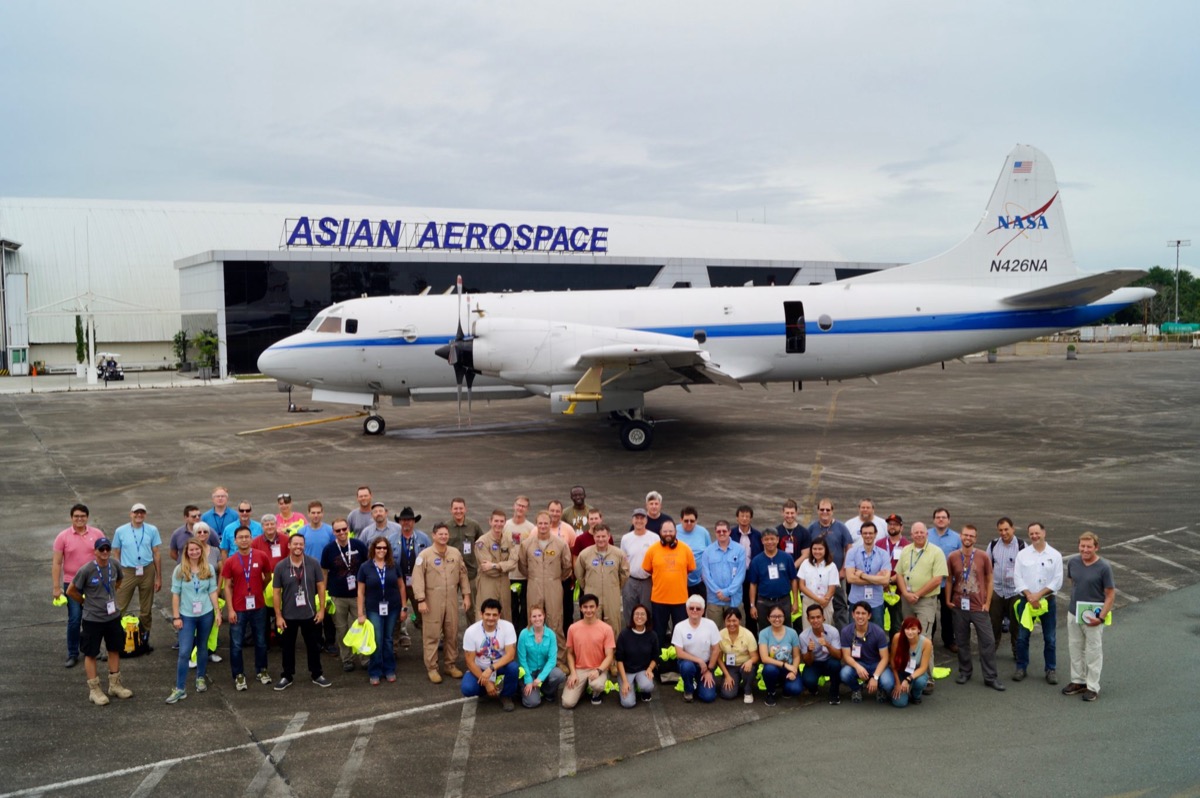
Credit: ESPO, NASA
NASA field campaign studying aerosol-cloud-precipitation interactions in the maritime tropical environment. The P-3B and SPEC Learjet conducted 30 combined science flights in the vicinity of the Philippines, sampling convective cloud systems over the warm ocean west of Luzon.
All field campaigns (1998–2025)
| Campaign | Year(s) | Location | Role |
|---|---|---|---|
| DOE CROCUS Urban Flooding (CROCUS) | 2025 | Chicago, IL | Co-Principal Investigator |
| DOE CROCUS Urban Canyons (CROCUS) | 2024 | Chicago, IL | Co-Principal Investigator |
| NSF PERiLS — Propagation, Evolution, and Rotation in Linear Storms | 2022–2023 | Southeast USA | Co-Principal Investigator |
| NOAA Observations: Lake Effect Snow Microphysics | 2022–2024 | Buffalo, NY | Co-Principal Investigator |
| NASA CAMP²Ex — Cloud, Aerosol and Monsoon Processes Philippines Experiment | 2019 | Philippines | Mission Scientist |
| NSF RELAMPAGO — Remote sensing of Electrification, Lightning, And Mesoscale/microscale Processes with Adaptive Ground Observations | 2018–2019 | Córdoba and Mendoza Provinces, Argentina | Principal Investigator |
| DOE CACTI — Cloud, Aerosol, and Complex Terrain Interactions | 2018–2019 | Sierras de Córdoba, Argentina | Science Steering Group |
| NSF DOW educational radar deployment | 2016 | University of Illinois | — |
| NASA-NSF OLYMPEX — Olympic Mountains Experiment | 2015 | Olympic Mountains, WA | Mission Scientist |
| NASA IPHEx — Integrated Precipitation and Hydrology Experiment | 2014 | Asheville, NC | Mission Scientist |
| CHUVA-SUL — Cloud processes of the main precipitation systems in Brazil | 2012 | Santa Maria, RS, Brazil | Science Investigator |
| NASA GCPEX — GPM Cold-season Precipitation Experiment | 2012 | CARE Site near Barre, Ontario, Canada | Mission Scientist |
| NSF DOW educational radar deployment | 2012 | University of Illinois | — |
| NASA/DOE MC3E — Midlatitude Continental Convective Clouds Experiment | 2011 | SGP Site, Oklahoma | Mission Scientist, Forecast Operations |
| NASA GRIP — Genesis and Rapid Intensification Processes | 2010 | Fort Lauderdale, FL | Forecast Operations |
| NASA JEMEX | 2010 | Jemez Mountains, NM | Principal Investigator |
| NSF OPEL-WG — Western Ghats Orographic Precipitation Study | 2008–2011 | Karnataka, India | Principal Investigator |
| NSF ISS educational radar deployment | 2008 | University of Illinois | — |
| NSF/NOAA NAME — North American Monsoon Experiment | 2004 | Northwest Mexico | Radar Scientist |
| NASA Front Range Pilot Project | 2004 | Greeley, CO | Mission Scientist |
| NSF MOPHREX | 2001 | Annapurna region, Nepal | Radiosonde Scientist |
| NSF IPEX — Intermountain Precipitation Experiment | 2000 | Wasatch Front, UT | Radiosonde Scientist |
| DOE Peter Sinks Experiment | 1999 | Bear River Range, UT | Tethersonde Scientist |
| NASA KWAJEX — Kwajalein Experiment | 1999 | Kwajalein Atoll, Marshall Islands | Radar and Aircraft Scientist |
| NASA CAMEX-3 — Convection And Moisture Experiment | 1998 | Cocoa Beach, FL | Aircraft Scientist |
| NASA TEFLUN-A — Texas–Florida Underflight | 1998 | Southeast Texas | Radiosonde Scientist |